


University Hospitals Opens New Stone Clinic at Ahuja’s Cutler Center for Men
January 15, 2026
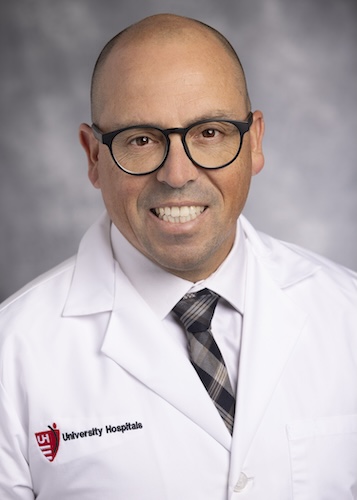
Dr. Jose Salvado, MD, will become the new Division Chief of Stone Disease at University Hospitals.
CLEVELAND – University Hospitals will launch a first of its kind stone clinic at the Cutler Center for Men at UH Ahuja Medical Center, a comprehensive destination designed to deliver efficient, coordinated, and compassionate care for patients with kidney stone disease.
The UH Stone Clinic provides patients with a single, convenient location for diagnosis, treatment, and prevention — including advanced imaging, streamlined access to specialists, and same-day coordinated visits when needed. By bringing together experts across multiple disciplines, the clinic is redefining how stone disease is managed in Northeast Ohio.
“Kidney stone patients are often in severe pain and need to be seen quickly,” said Jose Salvado, MD, newly appointed Chief, Division of Stone Disease at University Hospitals. “Until now, most of these patients had no clear pathway for immediate, comprehensive care, often leading them to the emergency room. The UH Stone Clinic changes that by providing rapid access to expert treatment and long-term prevention in one place.”
Together, this integrated team delivers multidisciplinary care that not only treats kidney stones but also addresses the underlying factors that contribute to their formation. The clinic model aims to reduce unnecessary emergency department visits, shorten treatment delays, and improve outcomes through preventive education and ongoing support.
The Stone Clinic team includes:
- Dr. Jose Salvado, Chief, Division of Stone Disease
- Dr. Felipe Pauchard, Urology
- Dr. Rafael Garcia, Nephrology
- Stephanie Tvorik, Registered Dietician
There are two main types of cases: (1) stones discovered incidentally, when imaging for another reason detects them, and (2) stones that become symptomatic, most commonly presenting as renal colic, hematuria, infection, or a combination of these.
Approximately 86% of patients have diet-related causes, while the remainder have underlying renal or endocrine disorders—such as renal tubular acidosis or hyperparathyroidism. A “healthy” diet isn’t necessarily a “stone-free” one. For instance, vegetarians and vegans tend to have more oxalate-rich foods, increasing risk, while people who eat a lot of animal protein form more uric acid stones. So, a balanced diet is ideal, and depending on the case, a formal metabolic evaluation with a 24-hour urine collection is recommended. The clinic will have a certified dietician for all patients to see in this shared visit.
Another common question is whether all stones need treatment. According to Dr. Salvado, “Not all stones need management. It depends on the size, location, and several other factors. Some special circumstances—such as having a single kidney, limited access to emergency care, or high-risk occupations (like pilots, who cannot risk renal colic mid-flight)—require different management strategies.
Treatment options include: ureteroscopy, extracorporeal shockwave lithotripsy, and percutaneous surgery, emphasizing their respective benefits and risks.
“The Stone Clinic represents how UH is reimagining specialty care around the consumer,” said Lee Ponsky, MD, Chair, Department of Urology, UH Medical Center, Lee and Charlotte Goldberg Chair in Advanced Surgical Therapies and Master Clinician in Urologic Oncology. “By combining urology, nephrology, nutrition, and imaging in one coordinated hub, we’re ensuring faster access and better experiences for every patient we serve.”
The clinic offers a sequential one and a half-hour appointment with three providers at 30 minutes each on Wednesday afternoons at UH Ahuja Medical Center’s Cutler Center for Men on the third floor of the Drusinsky Sports Medicine Institute.
To make an appointment please call 214.844.3009.